

Last Updated: October 24, 2026
Quick Summary
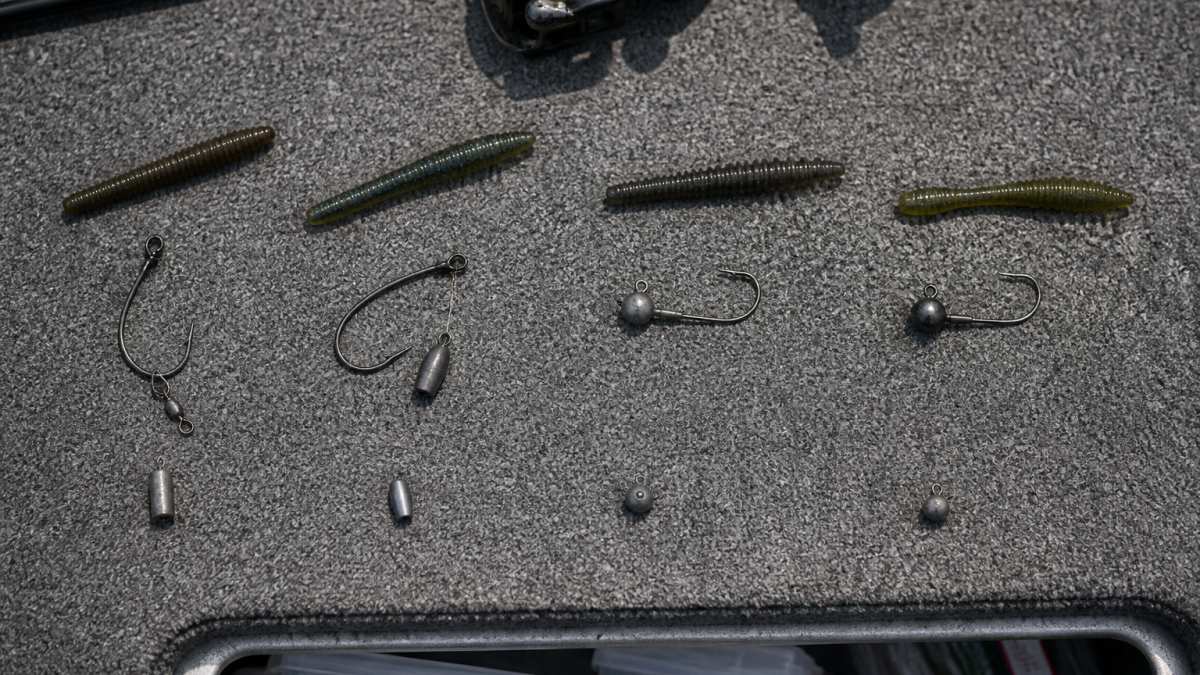
Finesse soft plastics are small, subtle baits fished slowly on light line to trigger pressured bass that ignore bigger, faster presentations. Match the rig to the cover, depth, and how locked-down the fish are, choosing among a drop shot, Texas rig, shaky head, or Ned rig. When two rigs seem to fit, tie on the one that lets you fish slowest.
- A drop shot keeps the bait 6 to 18 inches above a cylindrical weight on 6-8 lb fluorocarbon.
- The Texas rig hides the hook point so you can drag it through grass, brush, and laydowns without snagging.
- A Ned rig pairs a 2.5-3 inch stickbait with a 1/16 to 1/8 oz mushroom jighead on 6-8 lb fluorocarbon.
- Dead-stick a Ned rig for 3-5 seconds after each hop, since most strikes happen on the pause.
- Set the hook with a smooth sideways sweep, not a hard overhead snap, on 6-8 lb line.
Table of Contents
- Finesse Soft Plastic Rigs: Which Setup Fits the Conditions
- How to Rig a Finesse Worm for a Natural Fall
- Best Hooks for Finesse Soft Plastics: Size, Gap, and Wire
- How to Fish a Ned Rig on Pressure Water
- Bite Detection and Hook Sets for Light-Line Fishing
- Stocking Your Finesse Box at Kaizen Fishing USA
- Frequently Asked Questions
Finesse Soft Plastic Rigs: Which Setup Fits the Conditions
Finesse soft plastics are small, subtle baits fished slowly on light line to trigger pressured bass that ignore bigger, faster presentations. Match the rig to the cover, depth, and how locked-down the fish are, most days come down to four finesse rigs.
| Rig | Best For | Cover | Line | Retrieve |
|---|---|---|---|---|
| Drop shot | Deep, open water; suspended fish | Light | 6-8 lb fluorocarbon | Shake in place, tiny drags |
| Texas rig | Grass, brush, laydowns | Heavy | 8-12 lb fluorocarbon | Drag, hop, pause |
| Shaky head | Rock, gravel, hard bottom | Medium | 6-10 lb fluorocarbon | Slow drag with a shake |
| Ned rig | Pressured fish, open bottom | Light | 6-8 lb fluorocarbon | Hop and dead-stick |
A Practical Decision Tree for Picking a Rig
Walk through these questions in order.
1. How deep is the water, and where are the fish holding?
- Suspended in 15+ feet: drop shot, the bait hovers in the strike zone.
- Bottom-related in 5-20 feet: shaky head or light Texas rig.
- Shallow (under 8 feet) and pressured: Ned rig's slow shimmy fall.
2. What kind of cover are you fishing?
- Grass, brush, laydowns, wood docks: Texas rig, the buried hook point slides through without snagging.
- Rock, gravel, hard bottom, bluff walls: shaky head, the jighead stands the worm up.
- Open bottom, sand, sparse cover: Ned rig or drop shot.
3. How clear is the water?
- Clear (visibility over 3 feet): natural colors, green pumpkin, watermelon, smoke, and 6-8 lb fluorocarbon.
- Stained to muddy: darker colors, black and blue, junebug, and 8-12 lb line.
4. How windy is it?
- Calm: drop shot and Ned rig, you can feel subtle bites on slack line.
- Windy (over 10 mph): shaky head or Texas rig with a 3/16 to 1/4 oz weight.
5. How active are the fish?
- Neutral to negative (post-front, heavy pressure): Ned rig, drop shot, dead-stick pauses.
- Active and feeding: shaky head or Texas rig with a hop-and-pause.
Drop Shot: The Vertical Presentation
A drop shot keeps the bait above the sinker on a short leader, so the plastic hovers and quivers in place, ideal for suspended bass in deep water and fish that won't chase. Tie a small hook 6 to 18 inches above a cylindrical drop-shot weight on 6-8 lb fluorocarbon and a light, sensitive rod. The retrieve is barely a retrieve: drag the weight along the bottom, then shake the rod tip.
Texas Rig and Shaky Head: Bottom Coverage
The Texas rig hides the hook point inside the plastic, so you can drag it through grass, brush, and laydowns without snagging. A shaky head does the same on hard bottom, standing the worm up. Both are bottom-contact presentations, keep the rod tip low and stay in touch with the bait. Watch out: a heavy weight and fast drag skip the slow, natural fall finesse depends on.
Ned Rig: When Pressure Changes the Game
A Ned rig is a short, buoyant stickbait on a light mushroom jighead, the bait for bass that have seen everything and won't commit to a bigger profile.
Cast to the edge of cover, let it fall on a semi-tight line, and count it down. Hop once, let it sit, shake it in place.
- Use 6-8 lb fluorocarbon and a light spinning rod.
- Keep the bait small and the profile subtle.
- Fish it slower than feels right.
The common mistake is fishing a Ned rig too fast. Pressure-water bass want an easy meal that isn't moving much. Give them one.
Species and Non-Bass Applications
Finesse soft plastics aren't just a bass game, the same slow, small-profile approach works on other species.
- Panfish (crappie, bluegill): A 2-3 inch finesse worm or small Ned-style stickbait on a 1/16 oz mushroom jighead is a crappie killer around brush piles and dock pilings.
- Walleye: A drop shot with a 3-4 inch finesse worm on 6-8 lb fluorocarbon around rock and gravel catches walleye when jigs and crankbaits get ignored.
- Trout and smallmouth in rivers: A light Texas rig or shaky head with a 3-4 inch worm, fished slow through current seams and behind boulders.
How to Rig a Finesse Worm for a Natural Fall
A natural fall starts with a straight, centered worm and a hook that doesn't smother it. Thread it so it hangs true and it will glide and shimmy on the drop instead of spiraling.
Follow these steps for a clean Texas-style finesse rig:
- Slide the hook point into the nose of the worm about 1/8 inch.
- Push it through and out the side, then pull the worm up over the hook eye.
- Rotate the worm so it sits straight, with no twist.
- Bring the hook point back through the body and barely skin it into the plastic.
- Check the fall in clear water beside the boat before you cast.
A worm that falls straight catches more fish than one that corkscrews.
Best Hooks for Finesse Soft Plastics: Size, Gap, and Wire
The best finesse hook is light-wire, wide-gap, and sized so the bait still has room to move. Thin wire sets easier on light line, a wide gap clears the plastic on the hookset, and the right length keeps the bait from balling up.
Hook size should scale with bait length, too big kills the action, too small won't hold a big fish.
Hook Sizing by Bait Length
| Bait Length | Hook Size | Style |
|---|---|---|
| 3 inch | 1 or 2 | Light-wire offset, wide gap |
| 4 inch | 1/0 | Offset worm hook |
| 5 inch | 2/0 | Offset or straight-shank |
| 6 inch | 3/0 | Offset worm hook |
For drop shots, use a small drop-shot hook in size 1 or 1/0. For Ned rigs, a mushroom-style jighead in 1/16 to 1/8 oz keeps the bait standing and falling slowly.
How to Fish a Ned Rig on Pressure Water
A Ned rig is a short, buoyant stickbait on a light mushroom jighead, the bait for bass that have seen everything. The slow, shimmying fall is what gets bit on pressured water.
Why the Ned Rig Works on Pressured Fish
Pressured bass see the same crankbaits, spinnerbaits, and big Texas rigs day after day. They learn to ignore fast, loud presentations. The Ned rig flips that script in three ways:
- Small profile: A 2.5-3 inch stickbait looks like an easy meal, not a threat.
- Slow, shimmying fall: The buoyant plastic and light jighead fall slower and more erratically than a standard worm, so fish that won't chase will eat something that falls into their face.
- Dead-stick pause: The bait sits motionless on the bottom, which is often when the strike comes.
Tackle for Ned Rigging
- Rod: 6'6" to 7' medium-light spinning rod, fast action.
- Reel: 2000 to 2500 size spinning reel with a smooth drag.
- Line: 6-8 lb fluorocarbon, it sinks and gives better bottom feel than monofilament.
The Retrieve: Hop, Pause, Dead-Stick
- Cast to the edge of cover, a dock, rock pile, or grass line, and let the bait fall on a semi-tight line.
- Count it down to the depth you think fish are holding.
- Hop once by lifting the rod tip 6-12 inches, then let it fall back.
- Dead-stick for 3-5 seconds, this is when most strikes happen.
- Shake it in place with small rod-tip twitches, then hop again.
If you feel a tick, weight, or the line jump, reel down and sweep the rod.
Ned Rig vs. Drop Shot vs. Shaky Head: When to Choose Which
All three are finesse presentations, but they shine in different situations:
- Ned rig: Shallow to mid-depth pressured fish, open bottom, slowest fall, the most subtle of the three.
- Drop shot: Deep, suspended fish and vertical presentations; the bait hovers in the strike zone longer.
- Shaky head: Rock, gravel, and hard bottom where you need bottom contact and a stand-up profile; covers water faster than a Ned rig.
Suspended and deep: drop shot. Bottom and pressured: Ned rig. Hard bottom and covering water: shaky head.
Adapting the Ned Rig for Other Species
The Ned rig isn't just for bass. A 2.5 inch stickbait on a 1/16 oz mushroom jighead is a crappie and bluegill magnet around brush and docks. For walleye, upsize to a 3-4 inch worm on a drop shot or shaky head in rock and gravel.
Bite Detection and Hook Sets for Light-Line Fishing
On light line, a bass bite often feels like weight, a tick, or nothing at all, the line may just stop falling or drift sideways. Set the hook with a sweep, not a violent snap.
Here's how we read the common signals:
- Line jumps or ticks: reel down and sweep the rod.
- Bait feels heavy: a fish has it; sweep now.
- Line stops falling early: something ate it on the drop.
Use a smooth, sideways sweep to drive a light-wire hook home. A hard, overhead hookset on 6-8 lb line snaps line and pulls small hooks.
Stocking Your Finesse Box at Kaizen Fishing USA
A good finesse box is small and deliberate: a few bait shapes, a range of hook sizes, and weights covering shallow grass to deep rock. At Kaizen Fishing USA, we stock premium JDM finesse soft plastics and the tackle that pairs with them, from finesse soft plastics to compact tournament-style crankbaits.
Start with these essentials:
- 3-5 inch finesse worms in natural colors
- Small creature baits and Ned-style stickbaits
- Light-wire offset hooks and drop-shot hooks
Once your box is set, the rest is time on the water. Finesse fishing rewards patience and clean rigging more than fancy gear.
Frequently Asked Questions
How do you fish finesse soft plastics for bass?
Fish finesse soft plastics slowly along the bottom with light line and small weights. Cast to structure, let the bait fall on a semi-tight line, then drag or hop it with long pauses. Most strikes come on the fall or during a pause, so watch your line for ticks and sideways movement. Downsize to 4- to 6-inch baits and 6- to 8-pound fluorocarbon when bass are pressured or the water is cold and clear.
What size hook should you use for finesse soft plastics?
Match hook size to bait length. A 4-inch finesse worm takes a size 1 or 1/0 hook, a 5-inch bait takes 1/0 to 2/0, and a 6-inch bait takes 2/0 to 3/0. For Ned rigs, use a 1/0 or 2/0 mushroom head with a wide gap. Thin-wire hooks penetrate easier on light line, but open the gap slightly so the plastic doesn't crowd the hook point.
What is the best retrieve for finesse soft plastics?
Drag and pause beats constant reeling. Cast, count the bait down to the bottom, then drag it a foot or two with the rod tip and let it sit. A three- to five-second pause gives pressured bass time to commit. In cold water, extend pauses to ten seconds. When bass are suspended, a slow lift-and-drop with a semi-tight line keeps the bait in the strike zone longer than a steady retrieve.
How do you detect bites when fishing finesse baits?
Watch the line where it enters the water, not just the rod tip. A tick, a sudden slack jump, or the line moving sideways means a fish has the bait. Keep a semi-tight line on the fall so you feel weight instead of slack. If the line feels heavy or mushy, reel down and sweep the rod to the side rather than setting straight up, which gives the hook a better angle to penetrate.
Finesse fishing on pressured water is a test of patience and precision, and the right bait makes every slow fall count. Kaizen Fishing USA carries premium JDM finesse soft plastics and specialized tackle built for serious anglers, with options for swimming, strolling, and FFS presentations. Get started with Kaizen Fishing USA and put the right bait in front of more fish this season.
