

Last Updated: October 26, 2026
Quick Summary
Whether expensive fishing gear is worth it depends on your fishing frequency and goals. Casual anglers fishing 10-20 days per year see little return on premium equipment, while tournament anglers fishing 100+ days per year find expensive fishing gear justified by improved reliability and performance.
- Budget rods cost $30-$60 and weigh 5.5-7.0 oz; premium rods cost $350-$600+ and weigh 3.0-4.0 oz
- A complete entry-level casting setup costs $125 total; a premium setup costs $780
- Premium reels last 5+ years with maintenance versus 2-3 years for budget reels
- At 40-80 fishing days per year, premium equipment becomes financially defensible
Table of Contents
- The Real Performance Gap: What Expensive Fishing Gear Actually Delivers
- Cheap vs. Expensive Fishing Rods: Where the Difference Matters
- Are Expensive Fishing Reels Worth It: Durability, Reliability, and Longevity
- Best Fishing Gear for the Money: A Cost-Per-Use Framework
- Are Expensive Swimbaits Worth It: Precision Lures for Serious Anglers
- Building Your First Premium Fishing Setup
- Frequently Asked Questions
The Real Performance Gap: What Expensive Fishing Gear Actually Delivers
Whether expensive fishing gear is worth it depends on your goals and commitment level. The performance differences are context-specific.
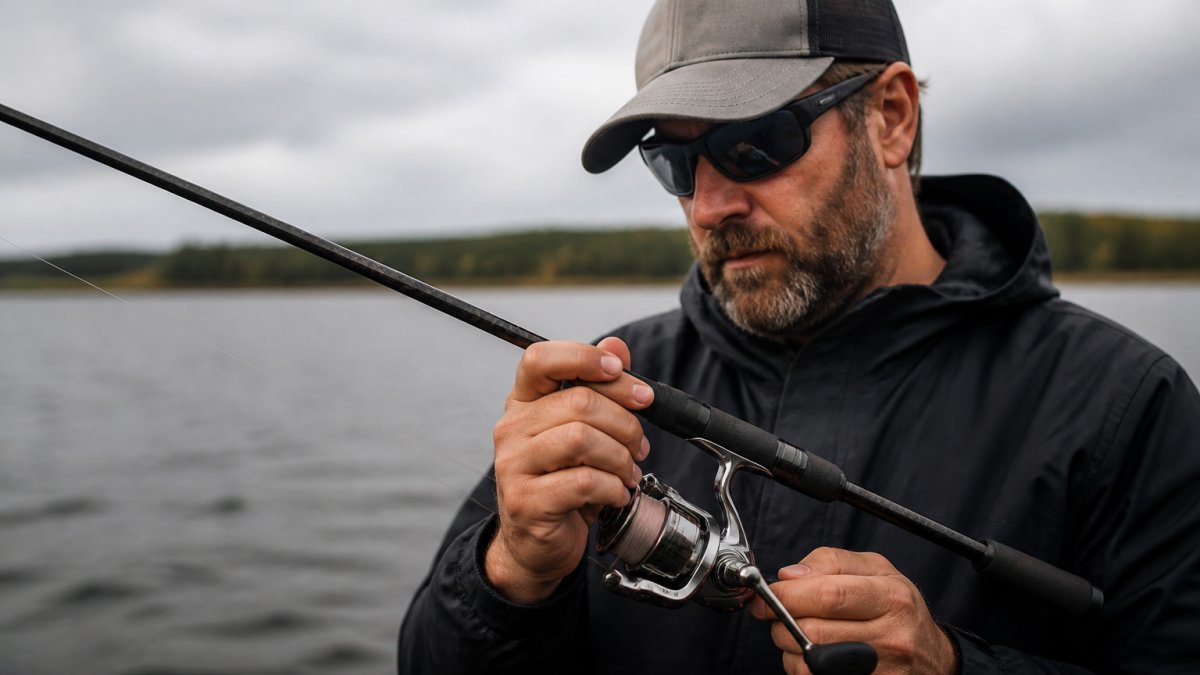
Those advantages don't make expensive gear necessary for every angler. Casual fishermen who fish a handful of times per year won't notice the difference enough to justify the cost. Tournament anglers and those targeting trophy fish in competitive waters notice immediately. According to research from TacticalBassin's rod comparison analysis, the key performance markers, sensitivity, lower weight, balance, and overall experience, do separate premium equipment from budget alternatives, though cost remains a significant downside for many buyers.
The real question is whether you'll notice enough to care, and whether the price is justified for your style.
Cheap vs. Expensive Fishing Rods: Where the Difference Matters
A budget rod costs less because manufacturers cut corners on materials and precision: lower-modulus graphite blends, less refined guides, simpler reel seats. The result is heavier, less sensitive, less balanced. But the gap isn't one leap from "cheap" to "premium", it's a series of tiers, each buying a specific, measurable improvement.
The Four Price Tiers and What Each Actually Buys
| Tier | Typical Rod Price | Blank Material | Guide Rings | Reel Seat | Weight (7' MH casting) | Warranty |
|---|---|---|---|---|---|---|
| Entry | $30-$60 | Low-modulus graphite/fiberglass blend | Aluminum oxide | Plastic/nylon | 5.5-7.0 oz | 1 year |
| Mid | $80-$150 | IM6-IM7 graphite | Stainless steel with ceramic inserts | Graphite | 4.5-5.5 oz | 1-3 years |
| Upper-mid | $180-$300 | IM8-IM10 or equivalent high-modulus | Hard ceramic (SiC/Alconite-class) | Exposed-blank graphite | 3.8-4.8 oz | 3-5 years |
| Premium | $350-$600+ | High-modulus/ nano-resin blends | Torzite-class or equivalent | Custom-fit exposed blank | 3.0-4.0 oz | Limited lifetime |
Where the Difference Actually Shows Up
Durability under load. Budget rods rarely snap on the first cast; they fail at the guides (inserts pop out), the reel seat (loosens under torque), or the tip (micro-fractures from repeated loading). Premium rods use harder guide inserts that resist grooving from braided line and reel seats that stay locked under heavy drag. Under tournament conditions, the failure timeline compresses.
The Complete-Setup Comparison Competitors Skip
Rod price alone misleads. A realistic complete casting setup at each tier looks like this:
| Component | Entry Setup | Mid Setup | Premium Setup |
|---|---|---|---|
| Rod | $50 | $120 | $400 |
| Reel | $40 | $100 | $250 |
| Line (spooled) | $10 | $18 | $30 |
| Terminal tackle/accessories | $25 | $50 | $100 |
| Total | $125 | $288 | $780 |
Are Expensive Fishing Reels Worth It: Durability, Reliability, and Longevity
| Reel Characteristic | Budget Reels | Premium Reels |
|---|---|---|
| Bearing Quality | Fewer, looser tolerances | More, precision-engineered |
| Drag System | Basic friction design | Advanced multi-disc or magnetic |
| Line Capacity | Standard | Optimized for specific techniques |
| Durability Under Load | Moderate | High, tournament-tested |
| Long-term Reliability | 2-3 years heavy use | 5+ years with maintenance |
Best Fishing Gear for the Money: A Cost-Per-Use Framework
The most practical way to evaluate whether expensive fishing gear is worth it is cost per use, but purchase price alone is the wrong input. Total cost of ownership includes repairs, replacement frequency, and resale value, which change the math dramatically with fishing frequency.
The Full Ownership Equation
Cost per use = (Purchase price + Repairs + Replacements − Resale value) ÷ Total fishing days
Worked Example: Two Rods, Same Angler
The premium rod still costs more per day, but the gap is 36 cents, not the $320 sticker difference, and that ignores fewer lost fish, better bite detection, and less fatigue. At this frequency it's defensible. At 15 days a year, the same premium rod costs $3.67 per day versus $2.47, and the performance gain rarely justifies it.
How Frequency Changes the Answer
- Casual anglers (10-20 days/year): Budget to mid-range gear makes sense. A $150-$250 rod-and-reel combo handles occasional bass fishing without unnecessary expense; premium gear rarely pays back before it's outgrown or resold.
- Serious hobbyists (40-80 days/year): Premium equipment starts to make financial sense. Performance advantages compound over hundreds of fishing days, and resale value softens the effective cost. A $400-$700 setup is defensible here.
- Tournament anglers (100+ days/year): Premium gear is effectively mandatory. Reliability, sensitivity, and consistency aren't luxuries when a single lost fish costs a paycheck; cost per use converges across tiers, and the performance gap decides outcomes.
A Buying Decision Framework
Use this checklist before choosing a tier:
The cost-per-use framework removes emotion from the buying decision, forcing honesty about how often you'll actually fish, what a failure costs, and which improvements matter for your situation.
Are Expensive Swimbaits Worth It: Precision Lures for Serious Anglers
The 5150 LD Swim Jig is a handmade 5150 LD Series Swim Jig built by Luke Davidson with premium Mustad hooks and quality-controlled by 5150 Fishing. It is priced at $9.99.
Building Your First Premium Fishing Setup
The Nasty Lure Company Respect Series crankbait ($19.99) is a flat-sided deep-diving crankbait with S.O.B. Technology and an internal tungsten-enhanced forward-facing sonar return.
The 5150 LD Football Jig ($9.99) and 5150 LD Arky ($9.99) are handmade 5150 LD Series jigs built by Luke Davidson with premium Mustad hooks and quality-controlled by 5150 Fishing.
Deciding whether expensive fishing gear is worth it comes down to honest self-assessment: How often will you fish? What techniques matter most? Are you chasing tournament wins or weekend relaxation?
Frequently Asked Questions
Do expensive fishing rods and reels actually increase catch rates?
Whether expensive fishing gear is worth it depends on your goals and commitment level.
What's the difference between cheap and expensive fishing rods?
The real question is whether the price of expensive fishing rods is justified for your fishing frequency and commitment level.
When should you upgrade your fishing gear to premium options?
Consider how often you fish and what techniques matter to you when deciding whether to upgrade.
Are expensive fishing lures and swimbaits worth the premium price?
The Nasty Lure Company Respect Series is a flat-sided deep-diving crankbait with S.O.B. Technology and an internal tungsten-enhanced forward-facing sonar return.
